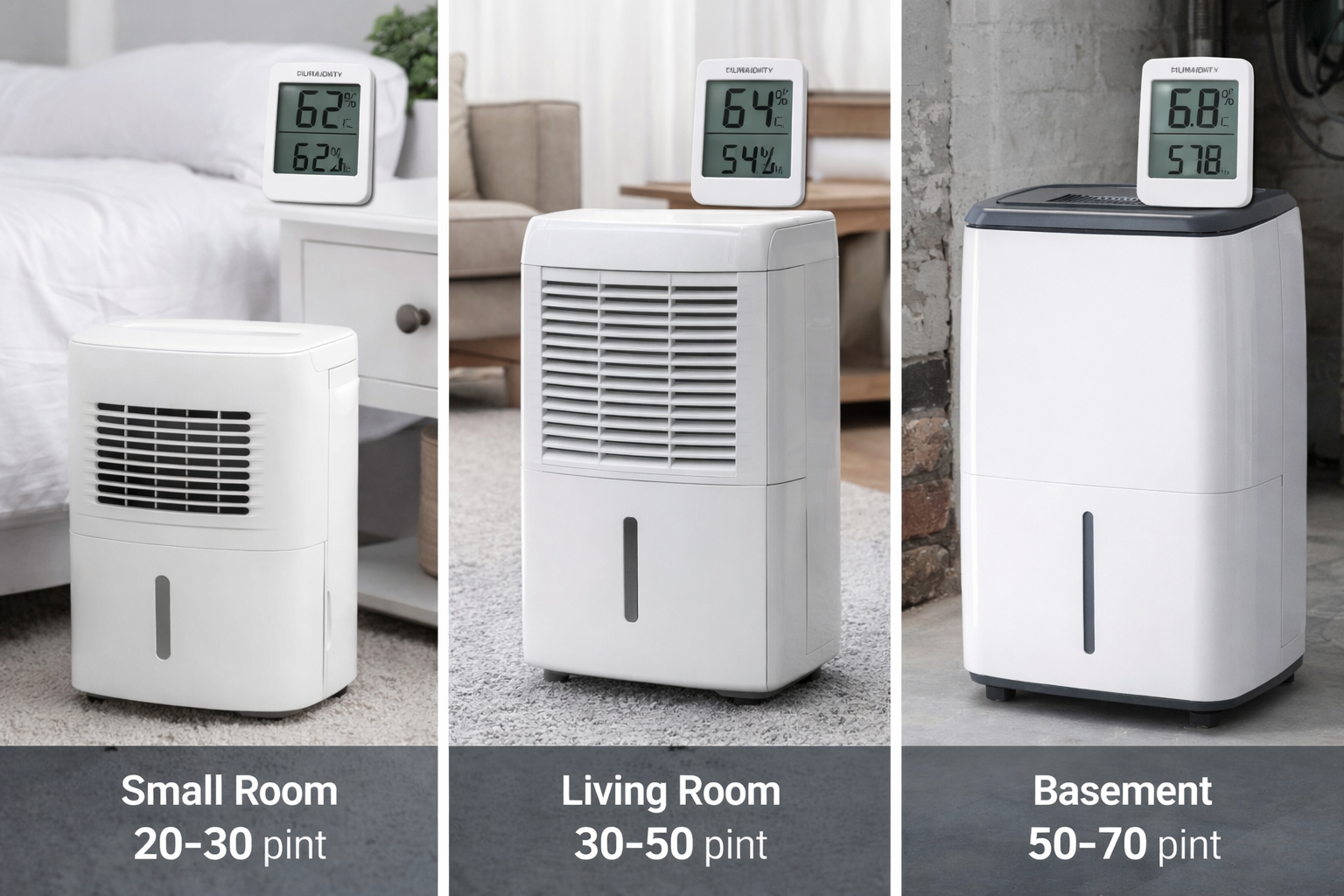
Choosing the right dehumidifier size is one of the most important steps in controlling indoor humidity.
A unit that’s too small won’t reduce moisture effectively, while an oversized model can waste energy and create uncomfortable conditions.
This guide explains how dehumidifier size works, what “pints” really mean, and how to choose the right size based on your room and humidity level.
Why Dehumidifier Size Matters
Dehumidifiers are designed to remove moisture from the air, but their effectiveness depends heavily on proper sizing.
If the unit is too small, it will run constantly without lowering humidity enough.
If the unit is too large, it may cycle on and off frequently, increasing energy use and wear on the machine.
The right size dehumidifier helps maintain stable humidity, improves comfort, and reduces long-term costs.
How Dehumidifier Size Is Measured (Pints Explained)
Dehumidifier capacity is measured in pints, which refers to how much moisture the unit can remove from the air in 24 hours.
For example, a 30-pint dehumidifier can remove up to 30 pints of water per day under standard conditions.
In general:
• Lower pint ratings are designed for smaller, lightly damp areas
• Higher pint ratings are meant for larger or more humid spaces
Understanding pint capacity makes it easier to match a dehumidifier to your actual needs.
Dehumidifier Size Guide by Room Type
Different rooms require different dehumidifier sizes depending on space, airflow, and moisture sources.
Small Rooms (Bedrooms, Bathrooms, Home Offices)
Recommended size: 20–30 pint
Small rooms trap moisture easily, especially bathrooms and bedrooms with limited ventilation.
A compact dehumidifier in this range is usually sufficient to control humidity without excessive noise or energy use.
Living Rooms, Apartments, and Medium Spaces
Recommended size: 30–50 pint
Living areas often experience moderate humidity from daily activities like cooking and showering.
A mid-range dehumidifier provides balanced moisture control while remaining energy efficient.
Basements and Damp Areas
Recommended size: 50–70 pint
Basements are naturally more humid due to cooler temperatures and ground contact.
Larger-capacity dehumidifiers are typically necessary to prevent mold growth and persistent dampness.
Other Factors That Affect Dehumidifier Size
Room size alone doesn’t always tell the full story. Several additional factors can increase or decrease the capacity you need.
High humidity levels, poor ventilation, frequent water exposure, and signs of mold all indicate a need for a higher-capacity unit.
Ceiling height also matters. Taller ceilings mean more air volume, which may require a larger dehumidifier even in smaller rooms.
Common Mistakes When Choosing a Dehumidifier Size
One common mistake is choosing a dehumidifier based only on square footage without considering humidity severity.
Another mistake is assuming bigger is always better. Oversized units may short-cycle and fail to maintain consistent humidity.
Ignoring noise level and energy efficiency can also lead to discomfort, especially in living spaces and bedrooms.
Final Thoughts: Choosing the Right Size Dehumidifier
The best dehumidifier is not the largest one, but the one that fits your space and moisture conditions.
By considering room type, humidity level, and daily usage, you can select a dehumidifier that works efficiently and protects your home long term.
A properly sized dehumidifier improves comfort, prevents moisture damage, and supports healthier indoor air year-round.
Leave a Reply