Many people know that indoor air quality affects comfort and overall well-being, but when humidity problems appear, the solution is not always clear. A humidifier and a dehumidifier do opposite things, yet choosing the wrong one can make indoor conditions feel even worse. The key is understanding what your home actually needs.
This guide explains the real differences between humidifiers and dehumidifiers, the signs to watch for, and how to decide which option makes sense for your space.
Understanding the Difference Between Humidifiers and Dehumidifiers
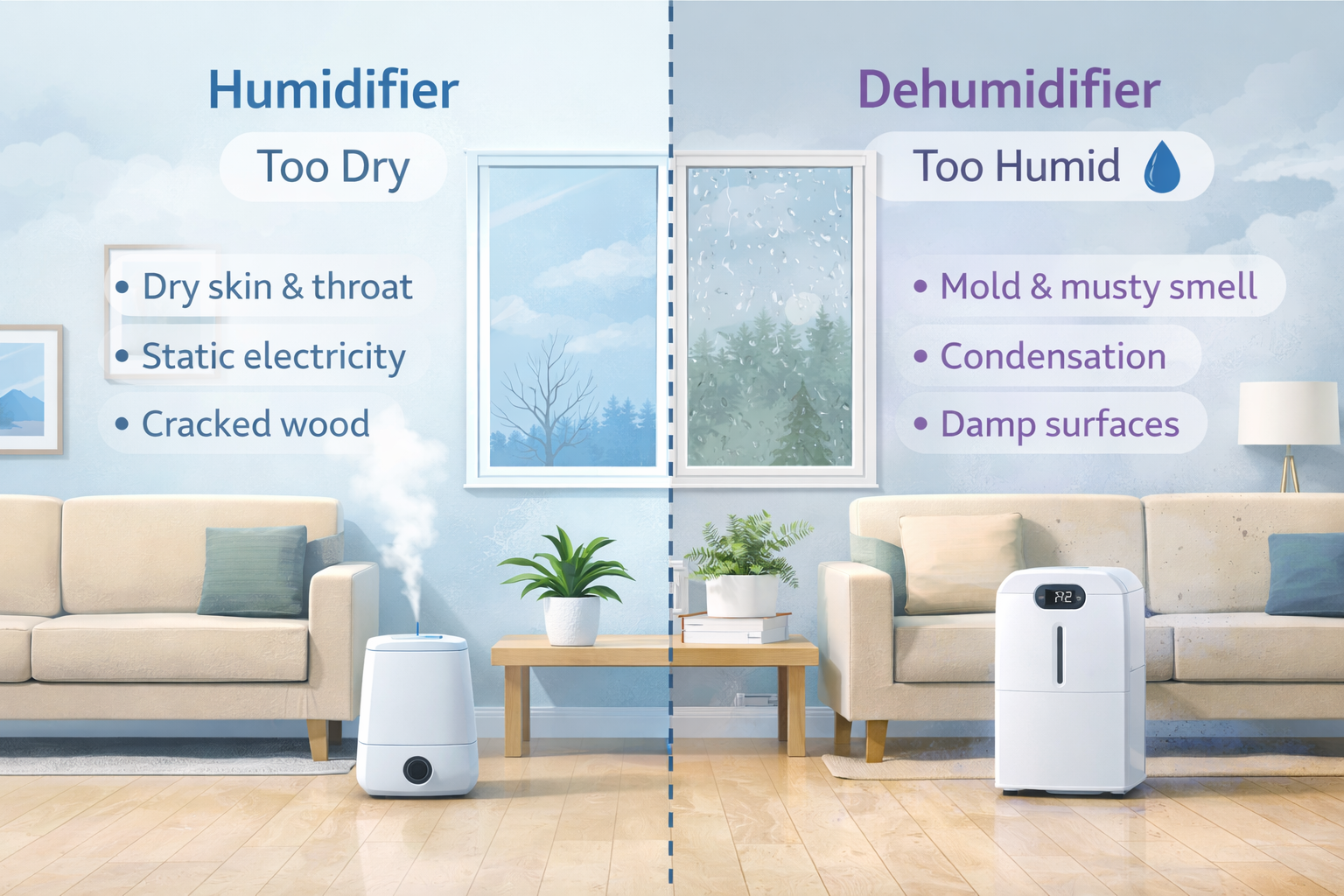
A humidifier adds moisture to dry indoor air.
A dehumidifier removes excess moisture from overly humid air.
Both devices aim to improve comfort, but they solve very different problems. One of the most common mistakes is choosing based on symptoms alone without understanding the underlying humidity issue.
Indoor humidity is measured as relative humidity. For most homes, the comfortable range falls between 30% and 50%.
When a Humidifier Is the Right Choice
A humidifier is helpful when indoor air becomes too dry, which often happens during colder months when heating systems run frequently.
Common signs of low humidity include dry skin or lips, irritated sinuses, frequent static electricity, dry throat in the morning, and cracked wooden furniture or floors. These symptoms usually indicate that moisture levels are below the ideal range.
In these situations, adding moisture to the air can improve comfort, reduce dryness, and help indoor spaces feel more balanced.
When a Dehumidifier Makes More Sense
A dehumidifier is designed for environments where moisture builds up too easily. This is common in warmer climates, during humid seasons, or in areas with poor ventilation.
Signs of excessive humidity often include musty odors, condensation on windows or walls, visible mold or mildew, and rooms that feel damp even when temperatures are comfortable. High humidity can also make indoor air feel heavier and less breathable.
Removing excess moisture helps prevent odor issues, protects surfaces, and improves overall indoor air quality.
Seasonal and Room-Based Considerations
The right choice often depends on both the season and the room.
During winter, many homes experience dry air due to heating systems, making humidifiers more useful in bedrooms and living spaces. In contrast, summer months can bring high humidity, especially in basements, bathrooms, and laundry areas, where dehumidifiers are more effective.
Rather than choosing one device for the entire home, it helps to consider where humidity problems actually occur.
Can You Need Both?
In some homes, yes. Different rooms can have different humidity challenges. For example, a bedroom may feel dry in winter, while a basement stays damp year-round.
Using the right solution in the right space is more effective than relying on a single device to solve every issue.
How to Decide What Your Home Needs
Before choosing between a humidifier and a dehumidifier, it helps to identify the real problem. Noticing symptoms, checking for condensation or dryness, and understanding seasonal patterns can make the decision much clearer.
When humidity stays within a healthy range, indoor air feels more comfortable, surfaces stay protected, and everyday living becomes easier.
Next, we’ll look at how to determine the ideal humidity level for each room in your home and how to maintain it year-round.
Leave a Reply