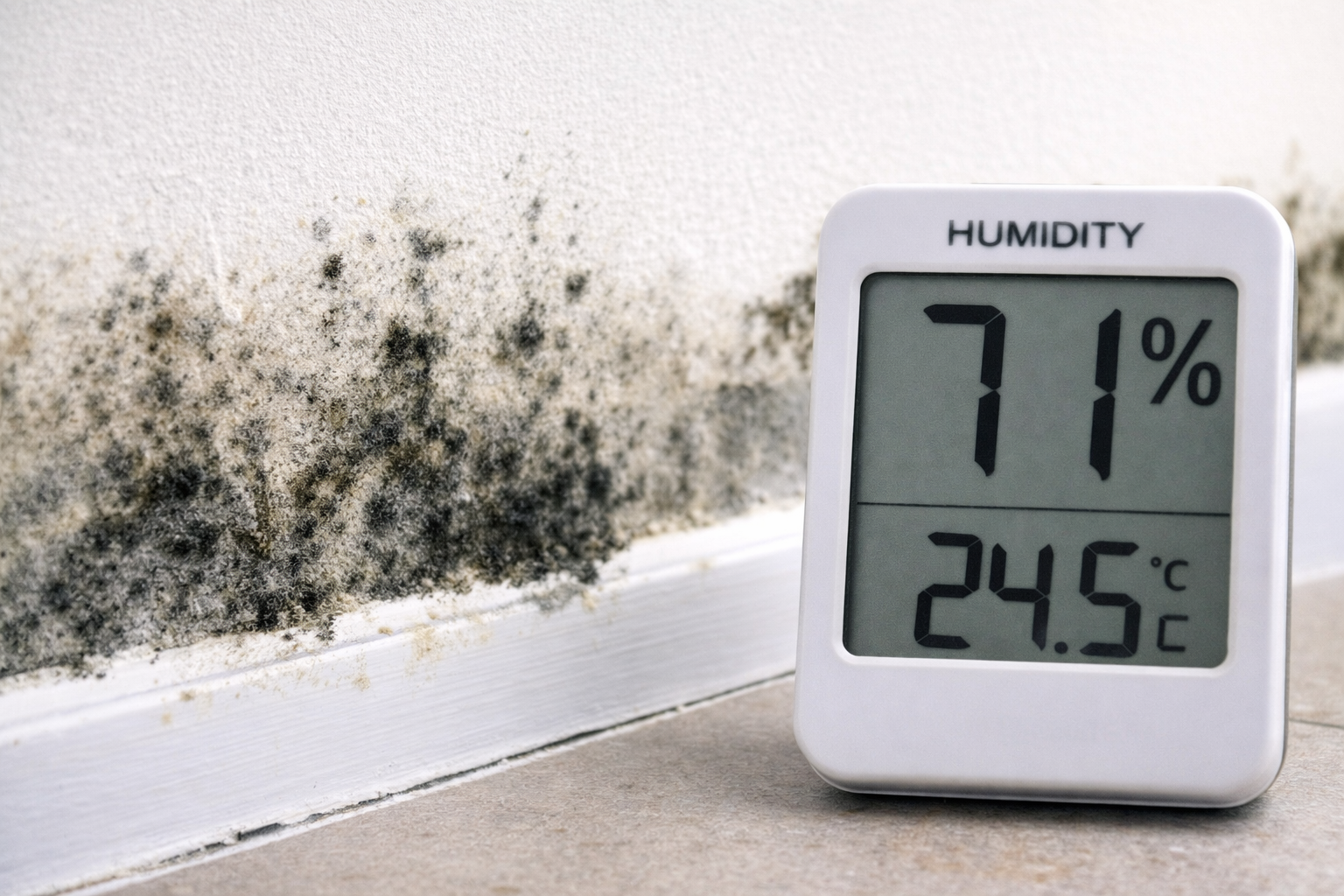
High indoor humidity doesn’t cause visible damage overnight.
However, when excess moisture lingers inside a home, mold growth can begin much sooner than many homeowners expect.
Understanding how quickly mold develops in humid conditions helps prevent long-term damage to both indoor air quality and building materials.
This guide explains how long high humidity takes to cause mold, what conditions speed up the process, and why early control matters.
How Mold Growth Is Linked to Humidity
Mold requires three basic conditions to grow:
moisture, organic material, and time.
High indoor humidity creates the moisture mold needs to survive and spread.
When relative humidity consistently stays above healthy levels, surfaces inside the home can remain damp even if they appear dry.
Once moisture is present, mold spores — which already exist in most indoor environments — can begin to grow.
How Long Does It Take for Mold to Start Growing?
In humid environments, mold can begin developing much faster than most people realize.
Under the right conditions, mold growth may start within 24 to 48 hours.
This does not always mean visible mold immediately appears, but microscopic growth can begin during this time.
If humidity remains high for several days or weeks, visible mold spots often follow.
Humidity Levels That Increase Mold Risk
Most experts recommend keeping indoor humidity between 30% and 50%.
Mold risk increases when humidity levels remain above this range.
• 50%–60%: Increased risk of moisture buildup
• 60%–70%: Ideal conditions for mold growth
• Above 70%: High likelihood of mold forming quickly
Consistently high humidity accelerates the timeline for mold development.
Areas Where Mold Develops Faster
Certain areas of the home are more vulnerable to rapid mold growth due to limited airflow and cooler surfaces.
Basements and crawl spaces
Bathrooms with poor ventilation
Laundry rooms
Behind furniture placed against exterior walls
Closets and storage areas
These spaces often trap moisture, allowing mold to develop faster than in well-ventilated rooms.
Why Mold Often Appears Without Warning
Mold does not always appear immediately on visible surfaces.
It frequently begins behind walls, under flooring, inside insulation, or within HVAC systems.
By the time mold becomes visible, humidity issues may have been present for weeks or months.
This delayed visibility is why humidity control is critical even when no mold is seen.
How to Reduce the Risk of Mold from High Humidity
Preventing mold is easier than removing it once growth begins.
Improving ventilation in moisture-prone areas
Monitoring indoor humidity with a hygrometer
Reducing moisture sources such as leaks or condensation
Maintaining consistent humidity control year-round
Addressing humidity early significantly lowers the chance of mold forming.
Why Early Humidity Control Matters
The longer high humidity is ignored, the greater the risk of mold-related damage.
Mold can affect indoor air quality, trigger allergies, and damage walls, flooring, and furniture.
Early humidity management protects both health and property.
Final Thoughts
High humidity does not need months to cause problems.
In the right conditions, mold can begin developing within days.
Monitoring humidity levels and addressing moisture early helps prevent mold before it becomes a visible or costly issue.
Leave a Reply