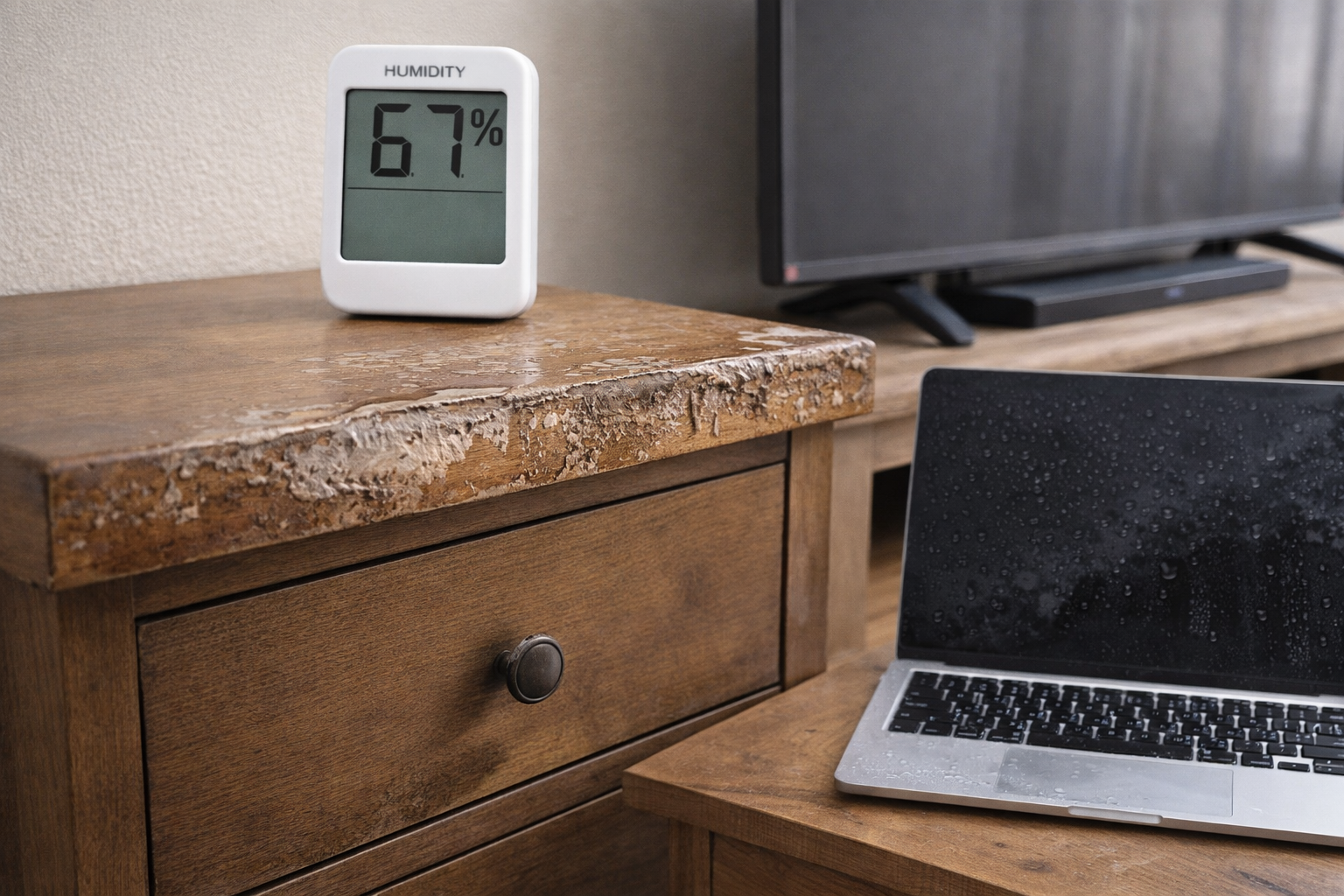
Indoor humidity plays a critical role in protecting not only your comfort but also the condition of your belongings.
When moisture levels remain high for extended periods, furniture and electronics can gradually deteriorate—often without immediate warning signs.
Many homeowners associate humidity problems with mold or air quality, but its impact on household items can be just as costly.
Understanding how humidity affects furniture and electronics helps prevent long-term damage and unnecessary replacements.
How High Humidity Affects Wooden Furniture
Wood is a natural material that absorbs and releases moisture depending on the surrounding air.
When indoor humidity stays too high, wooden furniture begins to absorb excess moisture.
This can cause wood to swell, warp, or lose its original shape.
Over time, joints may loosen, drawers may stick, and surfaces can develop cracks once the wood dries unevenly.
Furniture finishes are also vulnerable.
High moisture can lead to peeling, bubbling, or cloudiness in varnish and protective coatings, reducing both durability and appearance.
The Impact of Moisture on Electronics and Appliances
Electronics are highly sensitive to moisture, even when they appear to function normally at first.
High humidity allows condensation to form inside devices, especially when temperature changes occur.
Moisture inside electronics can corrode internal components, weaken circuit boards, and shorten product lifespan.
Appliances such as televisions, computers, gaming consoles, and home office equipment are particularly at risk.
Repeated exposure to humid air may lead to unexpected malfunctions, reduced performance, or complete device failure over time.
Signs That Humidity Is Damaging Your Home Items
Humidity-related damage often develops slowly, making it easy to overlook in the early stages.
Common warning signs include furniture doors or drawers that no longer close properly, visible warping in wood surfaces, or a persistent musty odor around storage areas.
For electronics, signs may include intermittent power issues, screen fogging, or unusual operational noises.
If multiple items across your home show similar changes, indoor humidity levels are likely contributing to the problem.
What Humidity Level Is Safe for Furniture and Electronics
Most experts recommend keeping indoor relative humidity between 30% and 50% to protect household items.
This range helps maintain material stability while preventing excessive dryness or moisture buildup.
Humidity levels consistently above 50% increase the risk of damage to both furniture and electronics.
Monitoring indoor humidity allows homeowners to identify problems early and maintain a balanced environment.
How to Protect Furniture and Electronics from High Humidity
Preventing humidity-related damage starts with awareness and proper moisture control.
Improving ventilation in moisture-prone areas such as kitchens, bathrooms, and basements reduces trapped humidity.
Using a hygrometer helps track humidity levels throughout the home, especially near valuable furniture or electronic setups.
Maintaining consistent indoor temperatures also reduces condensation risks that affect sensitive devices.
For long-term protection, managing humidity proactively helps preserve both structural materials and personal belongings.
Final Thoughts: Why Humidity Control Matters at Home
High indoor humidity does more than affect comfort—it quietly impacts the longevity of furniture and electronics.
Without proper control, moisture-related damage can lead to costly repairs or replacements over time.
By understanding how humidity affects your home and taking steps to keep levels balanced, you protect both your living environment and the items you rely on every day.
Early attention to humidity makes a lasting difference in home maintenance and overall indoor health.
Leave a Reply