Running a dehumidifier can dramatically improve indoor comfort, air quality, and moisture control.
However, many homeowners are unsure how long a dehumidifier should actually run each day.
Running it too little may allow humidity problems to persist, while running it too long can waste energy and strain the unit.
This guide explains how long to run a dehumidifier based on room type, humidity levels, and practical home conditions.
Why Dehumidifier Runtime Matters
Dehumidifiers work by pulling excess moisture from the air and collecting it in a tank or draining it away.
The amount of time needed depends on how much moisture is present and how quickly it accumulates.
Proper runtime helps:
• Maintain healthy indoor humidity levels
• Prevent mold and mildew growth
• Protect walls, furniture, and flooring
• Improve overall indoor comfort
There is no single “one-size-fits-all” runtime. The goal is to keep humidity within a healthy range rather than focusing on hours alone.
Ideal Indoor Humidity Levels to Aim For
Most experts agree that indoor humidity should remain between 30% and 50%.
• Below 30% may cause dry air discomfort
• Above 50% increases the risk of mold and moisture damage
A hygrometer is the most accurate way to track humidity and determine whether your dehumidifier is running long enough.
How Long to Run a Dehumidifier by Room Type
Different areas of the home require different runtime strategies due to moisture exposure and airflow.
Basement
Basements usually need the longest runtime because they are cooler, less ventilated, and closer to ground moisture.
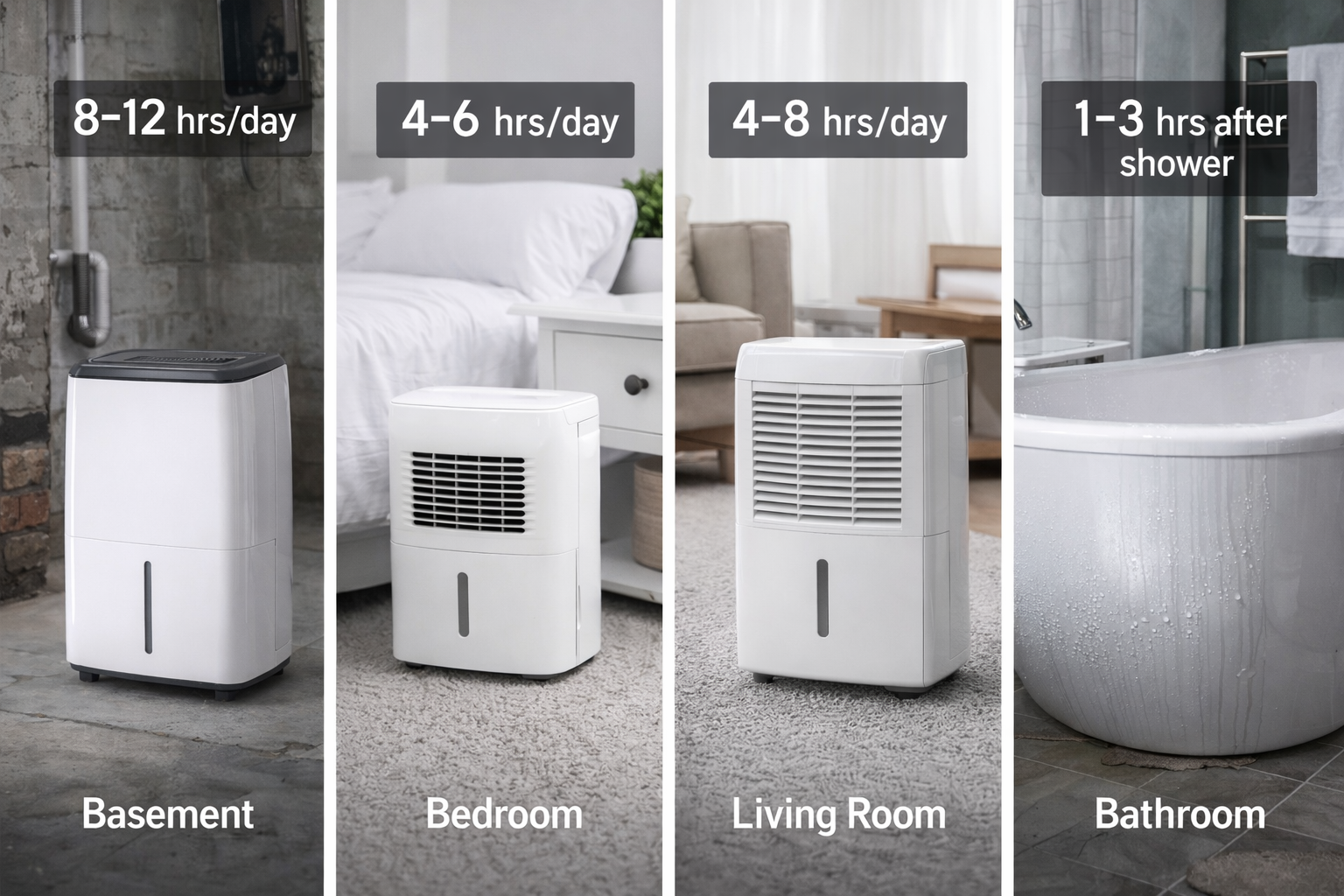
In many homes, a basement dehumidifier may need to run 8 to 12 hours per day, or even continuously, until humidity stabilizes below 50%.
Once stable, runtime can often be reduced or automated using a built-in humidity sensor.
Bedroom
Bedrooms typically generate moderate moisture from breathing and limited ventilation.
Running a dehumidifier 4 to 6 hours per day is often sufficient, especially during warmer or more humid seasons.
Some people prefer running it overnight for comfort and better sleep quality.
Living Room and Common Areas
Living rooms usually experience fluctuating humidity depending on occupancy, cooking, and airflow.
A runtime of 4 to 8 hours per day is common, particularly during humid weather or in open-plan homes.
Monitoring humidity levels helps prevent unnecessary overuse.
Bathroom
Bathrooms experience short bursts of very high humidity from showers and baths.
Rather than running all day, a dehumidifier should run 1 to 3 hours after showering to remove lingering moisture.
Proper ventilation is still essential in these spaces.
Signs You’re Running a Dehumidifier Too Long or Too Short
The room itself often provides clues about whether runtime is appropriate.
Signs the dehumidifier is not running enough:
• Persistent condensation on windows
• Musty or damp odors
• Humidity readings consistently above 50%
Signs the dehumidifier may be running too long:
• Indoor air feels excessively dry
• Increased static electricity
• Higher-than-expected energy bills
Adjusting runtime gradually is the best way to find the right balance.
Best Practices for Efficient Dehumidifier Use
Instead of relying on fixed hours, focus on smart usage habits.
• Use a hygrometer to guide decisions
• Set the dehumidifier to turn off automatically at your target humidity
• Keep doors and windows closed while running
• Clean filters regularly to maintain efficiency
Modern dehumidifiers with humidity sensors can greatly simplify this process.
Final Thoughts: Finding the Right Balance
A dehumidifier should run long enough to control moisture, not longer than necessary.
The ideal runtime depends on room type, humidity levels, and seasonal conditions.
By focusing on humidity targets rather than hours alone, homeowners can maintain healthier indoor air, prevent moisture damage, and use their dehumidifier more efficiently over time.
Leave a Reply