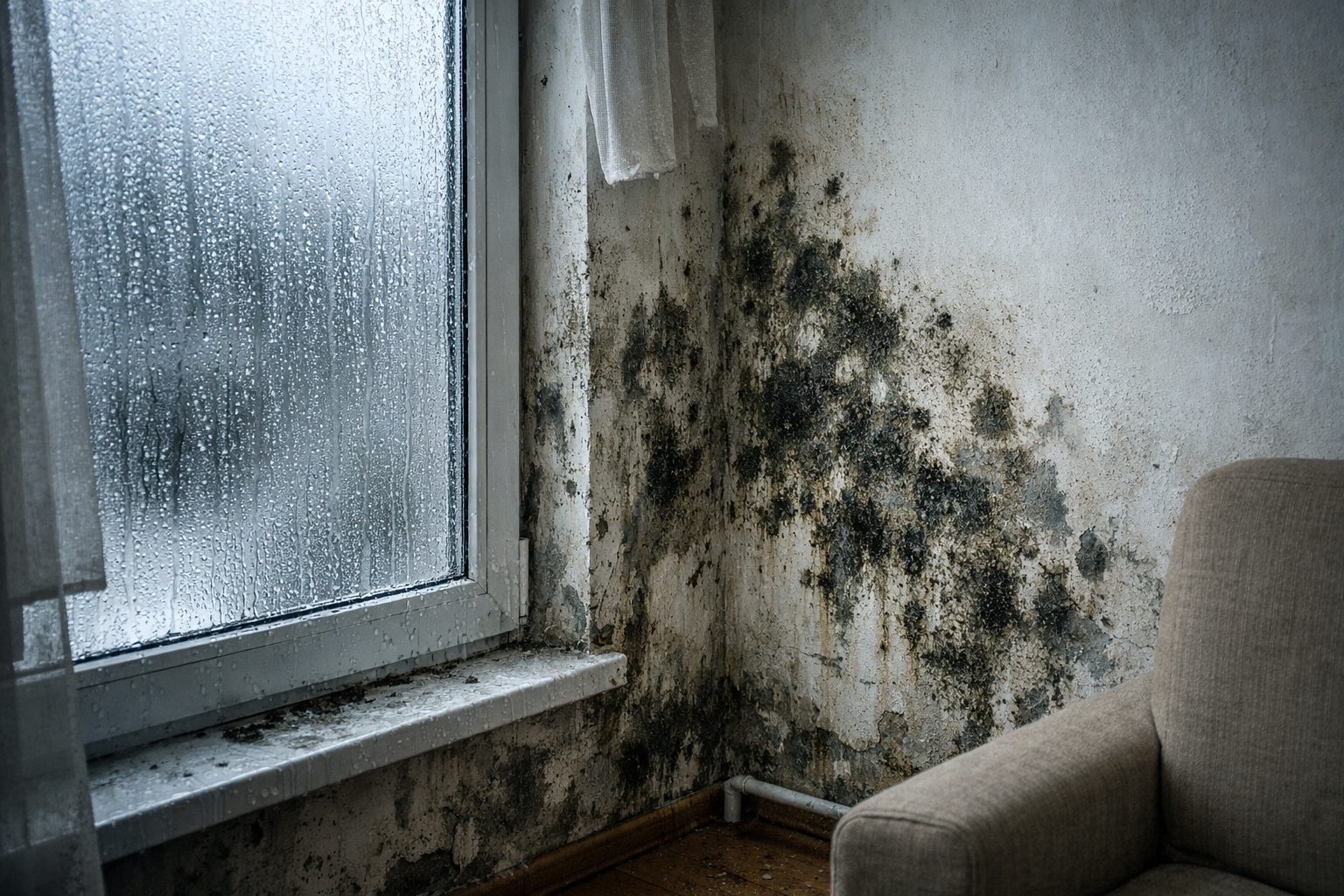
Maintaining healthy indoor humidity is essential for preventing mold growth in residential spaces.
When moisture levels remain elevated for extended periods, homes create ideal conditions for mold to develop and spread.
Understanding how humidity contributes to mold formation helps homeowners identify risks early and take effective preventive action.
What Is Mold and Why Does It Grow Indoors?
Mold is a type of fungus that reproduces through airborne spores.
These spores are naturally present both indoors and outdoors, but they only grow into visible mold when conditions allow.
Moisture is the most critical factor in mold growth.
Without excess moisture, mold spores remain dormant and harmless.
How High Humidity Creates the Perfect Environment for Mold
High humidity increases the amount of moisture available in the air.
When relative humidity consistently exceeds healthy levels, moisture settles on surfaces throughout the home.
This moisture allows mold spores to attach, absorb water, and begin growing.
Surface Condensation and Hidden Moisture
Humid air often condenses on cooler surfaces such as walls, windows, ceilings, and pipes.
Even small amounts of repeated condensation can keep surfaces damp enough for mold to thrive.
Hidden areas behind furniture, inside walls, or under flooring are especially vulnerable because moisture may go unnoticed for long periods.
Poor Ventilation Traps Moisture Indoors
Homes with limited airflow are more likely to retain humidity.
Bathrooms, kitchens, laundry rooms, and basements generate moisture that must be properly vented outside.
Without adequate ventilation, moisture remains trapped indoors, increasing humidity levels throughout the home.
Why Basements Are Especially Prone to Mold
Basements are naturally cooler and closer to groundwater, making them more susceptible to moisture buildup.
High humidity in basements often spreads upward, affecting the entire house.
This combination of cool temperatures and excess moisture makes basements one of the most common locations for mold growth.
Health and Structural Risks of Mold Growth
Mold growth affects more than just appearance.
Exposure to mold spores can worsen allergies, asthma, and respiratory discomfort, especially in children and older adults.
Over time, mold can also damage building materials such as drywall, wood, insulation, and carpeting.
How Controlling Humidity Helps Prevent Mold
Reducing indoor humidity limits the moisture mold needs to grow.
Maintaining humidity within a healthy range makes surfaces less hospitable to mold spores.
Monitoring humidity levels and addressing excess moisture early is one of the most effective long-term mold prevention strategies.
Final Thoughts: Humidity Control Is the First Line of Defense
Mold problems rarely appear overnight.
They develop gradually when moisture remains unchecked in the home.
By understanding how high humidity contributes to mold growth, homeowners can take proactive steps to protect indoor air quality, building materials, and overall comfort.
Leave a Reply